
Laser eye surgery can be a life‑changing investment — one that can reduce or eliminate your dependence on glasses or contact lenses.
This guide covers what laser eye surgery costs in Australia, what affects the price, and how to assess its value.
Book a consultation
Do NOT use this form in an emergency – contact one of our clinics or your nearest hospital emergency department instead.
Some services may not be performed by your preferred doctor or at your preferred clinic. We will confirm this with you before making an appointment.
What is the cost of laser eye surgery in Australia?
Laser eye surgery can only be performed by an ophthalmologist using specialised laser technology.
In Australia, the cost of laser eye surgery ranges from around $2,000 to $5,000 per eye, depending on the procedure performed (PRK, LASIK or SMILE).1 At Vision Eye Institute laser eye surgery costs between $3,250 and $3,950 per eye.
Why does the price vary?
Pricing is often influenced by:
- The ophthalmologist’s experience in vision correction surgery
- Ability to offer different laser eye surgery procedures for tailored treatment
- The complexity of your prescription and corneal measurements.
Regardless of price, always confirm your quote covers a personalised treatment plan based on clinical suitability, comprehensive pre- and post-operative care, advanced laser technology, and rigorous safety standards.
What factors affect the cost of laser eye surgery?
1. Procedure type
There are three different types of laser technologies to reshape the cornea for vision correction: flap based (LASIK), surface based (PRK or ASLA) and lenticule extraction (SMILE or SMILE pro®).
All procedures achieve the same visual outcome, but one may be more suitable than another in certain situations: for example, LASIK offers the fastest return to work and driving, SMILE pro is ideal for contact sports and PRK is preferred for thinner or irregular corneas.
LASIK, SMILE pro and PRK are available at Vision Eye Institute in Melbourne and Sydney.
2. Surgeon expertise and experience
Laser eye surgery is a highly precise medical procedure performed on one of your most important senses — your vision. The experience of your surgeon plays a critical role in safety, accuracy and visual outcomes.
At Vision Eye Institute, procedures are performed by specialist ophthalmic surgeons with extensive experience in refractive surgery, supported by:
- Rigorous pre‑operative diagnostic testing
- Evidence‑based surgical planning
- Strict clinical governance and safety protocols
- Access to a range of advanced laser platforms.
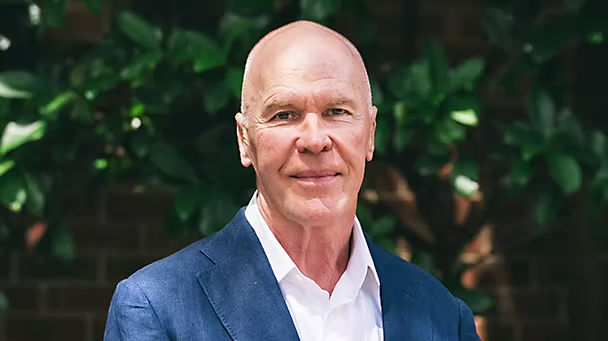
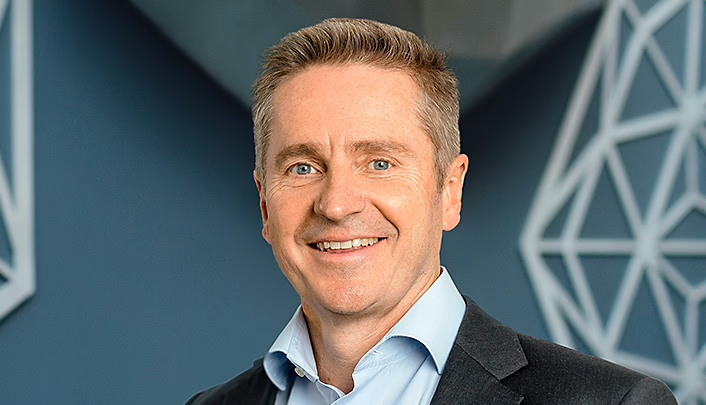
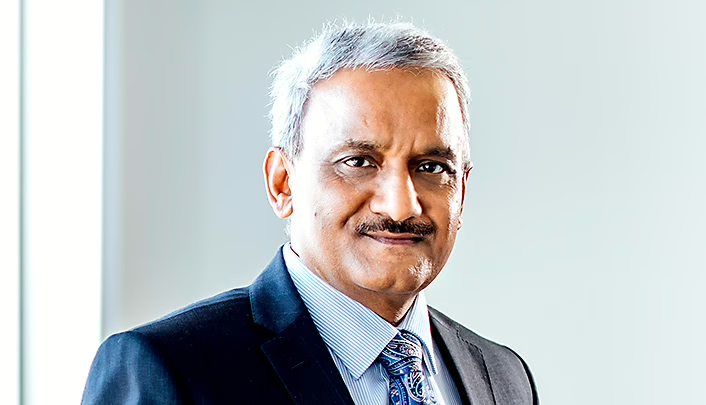
Our surgeons have pioneered techniques and technologies in Australia, continuously exchanging knowledge across our national network. Their expertise is recognised internationally through peer-reviewed publications, clinical trials, and leading conference presentations.
-
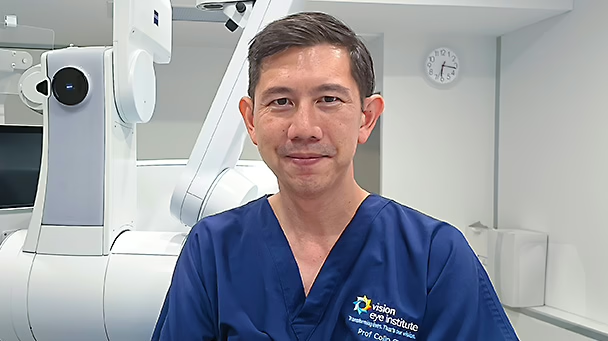
Prof Colin Chan
MBBS(Hons) MPhil FRANZCO
Locations
- Chatswood
Book a consultationwith Prof Colin Chan
-
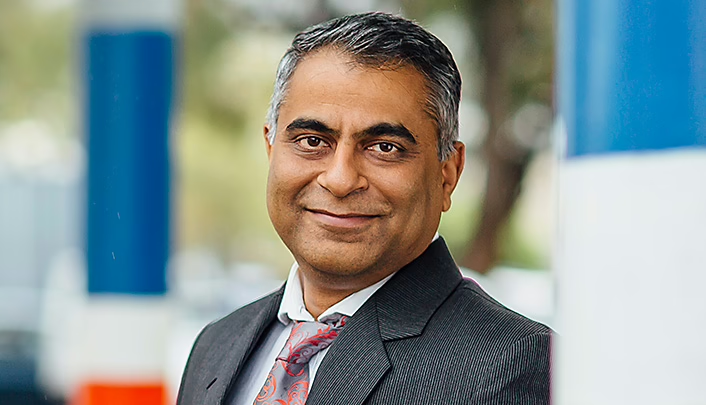
Dr Uday Bhatt
MBBS DTMH DO MSc(EBP) FRCSEd FRCOphth FWCRS FRANZCO
Locations
- Camberwell
- Coburg
- Footscray
Book a consultationwith Dr Uday Bhatt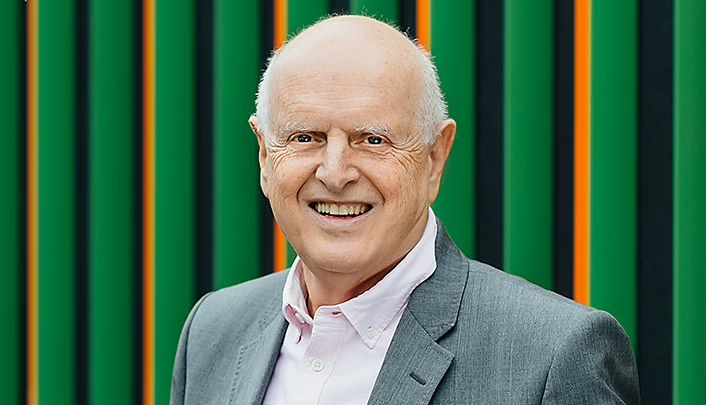
Dr Joe Reich AM
MBBS DO FRACS FRANZCO
Locations
- Camberwell
- Melbourne
Book a consultationwith Dr Joe Reich AM3. Inclusions
Laser vision correction involves more than just the surgery itself. Some clinics bundle all costs into one fee; others charge separately. Always check what’s included.
The Vision Eye Institute all-inclusive package typically covers:
- Comprehensive pre‑operative testing and assessment
- Laser and laser suite fees
- Surgeon and clinic team fees
- After‑hours clinical care for any immediate post-operative concerns
- Post‑operative care for 6 months, including protective glasses, medications, consultations and testing,
- Any recommended enhancement within 2 years of the initial procedure.
Following your assessment, we’ll provide a detailed quote with no obligation to proceed.
Is laser eye surgery worth it?
The real question isn’t just how much laser eye surgery costs, but what clear vision is worth to you. And it’s different for everyone.
For many, the value lies in the freedom and confidence that comes from long‑term vision correction – waking up seeing clearly, enjoying sport, travel and everyday life without glasses or contacts.
For those with high refractive errors, the goal may be a meaningful reduction (such as thinner, lighter glasses) rather than complete independence from correction.
Financially, it’s worth considering what you currently spend on glasses, contact lenses, solutions, and appointments each year as these costs can add up significantly over a lifetime.
Is laser eye surgery covered by Medicare or health insurance?
Laser eye surgery is elective and not covered by Medicare, though a Medicare rebate applies to the surgical consultation with the ophthalmologist if you have a current referral from an optometrist or GP.
Depending on your level of cover, some private health insurance policies cover laser eye surgery. Check with your insurer directly.
No-gap laser eye surgery with BUPA Ultimate Health Cover
BUPA members with Ultimate Health Cover are fully covered for a laser eye surgery procedure at Vision Eye Institute (LASIK, SMILE pro or PRK). Once your 3-year waiting period is over, the total cost for your laser eye surgery will be billed directly to BUPA.* To find out if you’re eligible, contact BUPA by calling 134 135 or visiting www.bupa.com.au.
Exclusive laser eye surgery offer for Medibank members
Medibank members can receive a 15% reduction on their surgical fees* if they have a LASIK, PRK or SMILE pro procedure performed at Vision Eye Institute.
This offer is available to members on selected extras and packaged covers. There’s no waiting period so you can upgrade your cover and receive the benefit straight away – contact Medibank on 132 331 to check your cover or learn more here.
Members with Medibank Gold Ultra Health Cover may claim benefits towards laser eye surgery, subject to lifetime limits and a 36-month waiting period.
*Excludes consultation fees and diagnostic tests.
Are there payment plans for laser eye surgery?
Vision Eye Institute has partnered with Humm and Latitude Gem Visa to offer flexible payment plans*, so you can access the care you need now and spread the cost over time. Whether you’re exploring LASIK, SMILE pro or another laser eye surgery procedure, our team can walk you through your finance options during your consultation.
*Terms and conditions apply.
Find out more about our interest-free, flexible payment options for laser eye surgery >
Considering laser eye surgery in Melbourne or Sydney?
Book a free assessment to:
- Learn whether a laser eye surgery procedure is suitable for your eyes
- Understand the experience and care behind your treatment
- Discuss available payment options
- Receive a personalised cost estimate with no obligation.
Sydney
-
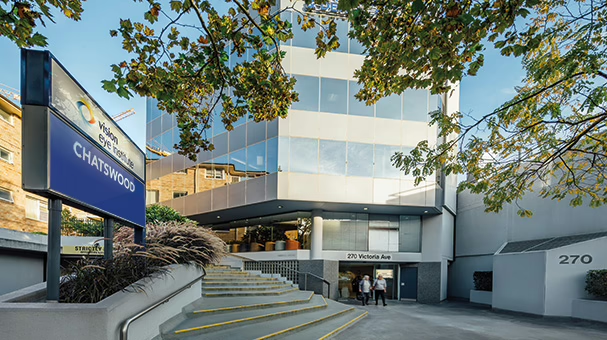
Chatswood
- 02 9424 9999
- Email us
-
Level 3, 270 Victoria Ave
Chatswood 2067 nsw -
M–F 8 am–5.30 pm
Sat Closed
Sun Closed
-
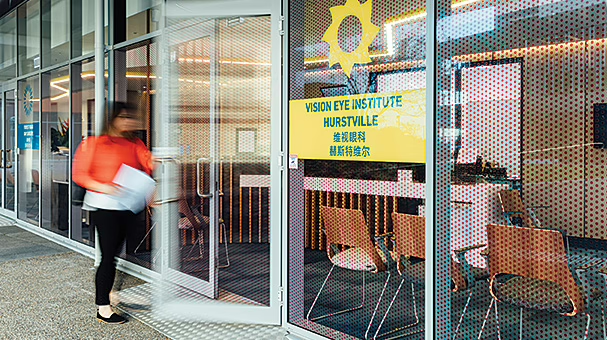
Hurstville
- 02 9330 6900
- Email us
-
99a Forest Rd
Hurstville 2220 nsw -
M–F 8 am–5 pm
Sat Closed
Sun Closed
-
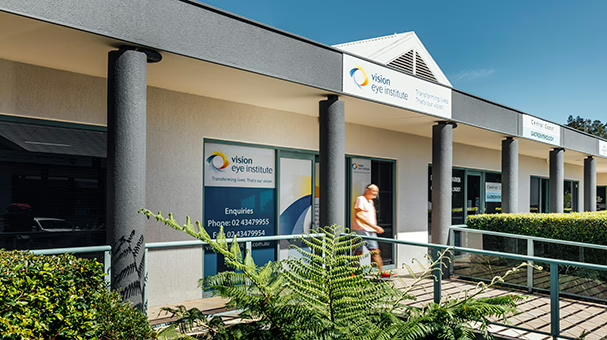
Tuggerah Lakes
- 02 4347 9955
- Email us
-
Suite C3, Kanwal Medical Complex, 654 Pacific Hwy
Kanwal 2259 nsw -
M–W 8 am–4.30 pm
Thu Closed
Fri 8 am–4.30 pm
Sat Closed
Sun Closed
Melbourne
-
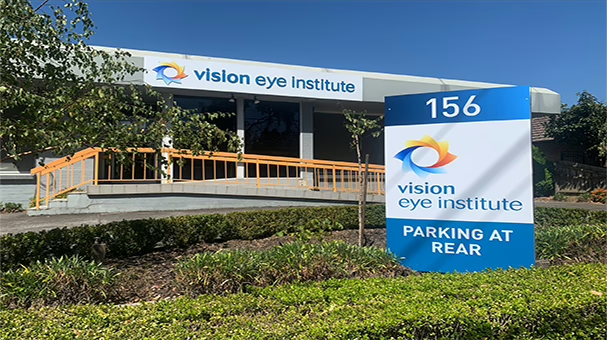
Blackburn South
- 03 9877 6288
- Email us
-
156 Canterbury Rd
Blackburn South 3130 vic -
M–F 8.30 am–5 pm
Sat Closed
Sun Closed
-
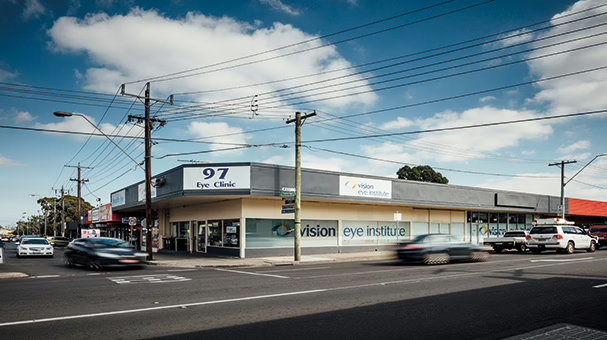
Coburg
- 03 9354 8611
- Email us
-
97 Bell St
Coburg 3058 vic -
M–F 8.30 am–5 pm
Sat Closed
Sun Closed
-
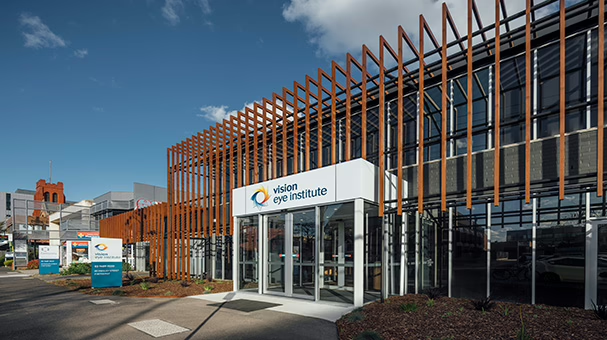
Footscray
- 03 9689 9233
- Email us
-
89 Paisley St
Footscray 3011 vic -
M–F 7.30 am–5 pm
Phone line 8 am–4.30 pm
Sat Closed
Sun Closed
-
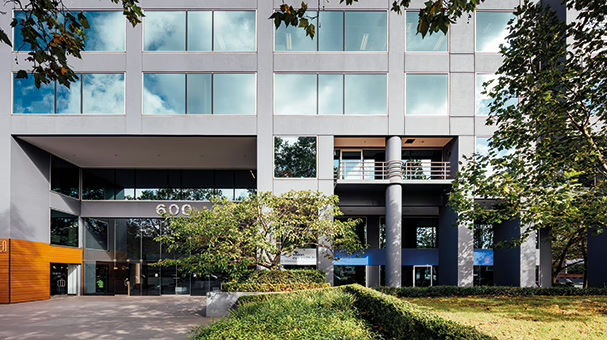
Melbourne
- 03 9521 2175
- Email us
-
Ground floor, 600 St Kilda Rd
Melbourne 3004 vic -
M–F 8 am–5 pm
Sat 9 am–2 pm (fortnightly)
Sun Closed
FAQs
Who is suitable for laser eye surgery?
Whether you are suitable for LASIK surgery, PRK (ASLA) or SMILE® pro will depend on whether you meet certain criteria.
Generally, if you meet the following criteria, you may be eligible for laser eye surgery. We also offer a free, no-obligation assessment where we will comprehensively check your eyes and discuss your vision correction options.
- Age: Between 18 and 55 years old*
- Vision problem: Short-sightedness, long-sightedness and/or astigmatism
- Stable vision: Glasses prescription has remained the same for at least 12 months
- General eye health†: Good
- General health: Good, not pregnant or breastfeeding
Note that laser eye surgery may not be recommended in people with very strong prescriptions.
*Patients over 55 may still be eligible for laser eye surgery. However, we recommend booking a comprehensive assessment to discuss other vision correction procedures that may better suit your needs.
†Your ophthalmologist will consider the general health of your eyes, the strength of your glasses prescription (i.e. your degree of refractive error), if you have a history of eye problems (e.g. dry eye, scarring or thinning of the cornea) and if you have previously had a serious eye injury.How long does laser eye surgery last?
During laser eye surgery such as LASIK, PRK (ASLA) and SMILE® pro, the cornea is permanently reshaped to correct a refractive error. This can include nearsightedness, farsightedness and/or astigmatism. Although laser eye surgery is permanent, some people may require a follow-up procedure to enhance or improve their initial results.
It’s also important to be aware that people begin to develop presbyopia, which is an age-related reduction in the ability to focus on near objects, from about 40–50 years of age. This is why many older adults wear glasses for reading and other near activities.
Because presbyopia affects the lens of the eye, not the cornea, laser eye surgery cannot prevent the condition from developing. As a result, you may need reading glasses even if your vision has been previously corrected with LASIK, PRK or another type of laser eye surgery.
Fortunately, there are presbyopia treatment options available that can reduce or eliminate the need for glasses, including laser procedures and lens replacement surgery.
Is LASIK worth it?
Whether laser eye surgery is worth it is subjective and dependent on your specific circumstances. If it’s important to you to be free from glasses or contact lenses, you may feel that laser vision correction is worthwhile. Many people who really dislike wearing glasses or contact lenses, or find that it intrudes on aspects of their daily life, enjoy having clearer vision after the procedure.
To help you decide whether laser eye surgery is worthwhile, we recommend finding out as much as you can about the procedure such as the different surgical approaches, benefits, risks and costs. Use your pre-surgical consultation to discuss any specific questions or concerns with the surgeon. Remember there is no obligation to proceed with surgery if you decide it isn’t the right option for you.
What age is best to get laser eye surgery?
The minimum age for laser eye surgery is 18 years. However, your vision may not have stabilised at this age, which is why the best age group for LASIK surgery is usually 25–40 years.
If you are over 18 and your glasses or contact lens prescription has not changed for at least a year, you are eligible to be considered for laser eye surgery.
Is it worth getting LASIK after 40?
Between the ages of 40 and 50, the lenses in our eyes naturally lose their ability to focus on near objects. This condition is called presbyopia and is why many older adults wear glasses for reading and other near activities.
If you are already over 40 when you have laser eye surgery, the effects of laser eye surgery last for a shorter period than if you were 25. This is because you are closer to developing presbyopia, and laser eye surgery is performed on the cornea, rather than the lens.
Fortunately, there are a number of ways to correct presbyopia without glasses. Treatments include laser procedures, refractive lens exchange (where the lens of your eye is replaced by an artificial lens) and implantable contact lenses.
If you are already over 45, other vision correction procedures may be more appropriate. Your ophthalmologist will advise you on which vision correction procedure is recommended for your specific situation and needs.
Is laser eye surgery painful?
Laser eye surgery isn’t painful. Patients are given local anaesthetic drops to minimise discomfort and are typically offered a mild sedative to help them relax. Most people simply report feeling mild or slight pressure on their eye during surgery.
There may be some discomfort immediately following the surgery, usually itching or burning. Depending on the type of surgery you have had, discomfort can persist for up to a week. You will be given medications to help reduce your symptoms.
Some people may experience dry eyes for a few weeks or months following laser eye surgery. Dry eye can be managed with artificial tears and other treatments.
Your ophthalmologist will discuss what you can expect during the recovery period following surgery.
Can I watch TV after LASIK surgery?
Your eyes will be more sensitive and easily strained than usual in the days following laser eye surgery. Eye strain may prolong your recovery time, so it’s important to minimise any activities that exacerbate eye strain. Additionally, it’s important to keep your eyes moist after surgery so that they can heal properly. Screen use contributes to dry eye by reducing your blink rate.
It can be tempting to watch TV to help pass the time while you recover from surgery. Your surgeon will advise when it is safe to resume watching TV, using your phone, tablet or computer, or even reading a book. When you do begin using screens again, it should be for a limited time only and include frequent breaks.
Excessive digital use or near work without adequate breaks can affect the results of your laser eye surgery. Your surgeon can advise you on appropriate screen use after surgery.
Is laser eye surgery safe?
Laser eye surgery is considered extremely safe. In fact, it is one of the safest elective surgical procedures available today. However, it is not zero-risk. Around 1% of people experience minor side-effects (such as dry eye or some residual error)1. Serious side-effects, such as infection, are incredibly rare (around 1 in 5000).
Laser eye surgery has been available for over 30 years now, so it is very well established. Ongoing research, increased surgeon expertise, advancements in technology, and refinements in the procedure itself continue to reduce the risk of side-effects or complications.
1. American Refractive Surgery Council. What Is the LASIK Success Rate?. United States: 2017. www.americanrefractivesurgerycouncil.org/laser-eye-surgery-lasik-success-rate/
What is the success rate of laser eye surgery?
Laser eye surgery has a 99% success rate. Research carried out in the United States suggests that 99% of LASIK patients achieve better than 6/12 (20/40) vision and more than 90% achieve 6/6 (20/20) vision or better. Additionally, 96% of patients report being perfectly satisfied with their results.1
1. American Refractive Surgery Council. What Is the LASIK Success Rate?. United States: 2017. www.americanrefractivesurgerycouncil.org/laser-eye-surgery-lasik-success-rate/
Are payment plans available for laser eye surgery?
We offer interest-free, flexible payment options for laser eye surgery in partnership with humm loan and Latitude Gem Visa (credit card). Read our laser eye surgery payment plans factsheet to learn more.
SMILE® and SMILE® pro are registered trademarks of Carl Zeiss Meditec
The information on this page is general in nature. All medical and surgical procedures have potential benefits and risks. Consult your ophthalmologist for specific medical advice.